


What is Hyperbaric Oxygen Therapy (HBOT)
Hyperbaric oxygen therapy is used for decompression sickness and in cases of gas embolism.
Decompression sickness occurs when a person who has spent some time in an environment of increased air pressure returns to an environment of lower pressure. It is also sometimes called diver's disease.
In a gas embolism, air enters directly into the bloodstream where it forms a gas bubble. This can be the result of a medical complication, as well as increased air pressure in the lungs.
During hyperbaric oxygen therapy, your body receives 10 to 15 times more oxygen. This has the following effects:
- gas bubbles become smaller and dissolve faster;
- oxygen supply to the tissues increases, reducing tissue swelling;
- wounds caused by lack of oxygen heal faster;
- new blood vessels form more easily in oxygen-deficient areas;
- in case of infections, the growth of certain bacteria and the production of their toxins is inhibited;
- improved action of some antibiotics and activation of the antibacterial action of white blood cells in tissues with oxygen deficiency.
Hyperbaric oxygen therapy is used in the following cases:
- decompression sickness,
- air or gas embolism,
- CO poisoning and smoke inhalation,
- gas gangrene (gangrene) and other infections with risk of tissue necrosis (e.g., deep neck infections), as an adjunct to surgery and antibiotics,
- chronic problematic wounds,
- diabetic wounds,
- jawbone irradiation,
- radiation-induced inflammation of rectum and bladder,
- brain injury,
- sudden hearing loss/acute acoustic trauma,
- tumor hypersensitivity to radiotherapy.
How is HBOT best for?
Before you start hyperbaric oxygen therapy, a heart film (ECG) and an X-ray of the lungs are taken.
Due to the oxygen-rich environment in the pressure chamber, there is an increased risk of fire. Therefore, among other things, you may not wear fleece sweaters or bring deodorant. You will receive the necessary instructions before the therapy begins.
During the treatment itself you sit or lie in a pressure chamber in the hospital or in your house - if you have a hyperbaric oxygen chamber for home use.
In that pressure chamber, the pressure is 2.4 to 2.8 times higher than normal atmospheric pressure.
This corresponds to a diving depth of 14 to 18 meters. Through a mouth mask or hood, you breathe in 100% oxygen, interspersed with short periods during which you breathe normal room air.
This creates a pressure difference in the oxygen in the blood and the oxygen in the tissues, providing the cells with a maximum amount of oxygen.
Usually you stay in the treatment chamber for 90 minutes, and this 5 to 7 times a week, until you have no more symptoms or when no more improvement is seen.
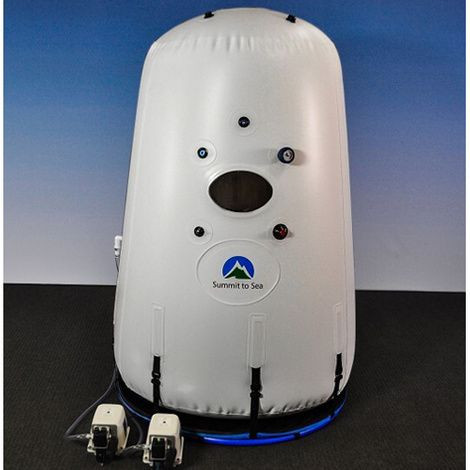
The Summit to Sea Dive Vertical Hyperbaric chamber for home use.
When is it best to avoid?
Hyperbaric oxygen therapy is to be avoided in cases of untreated pneumothorax or when taking certain medications, and to be avoided in cases of claustrophobia, upper respiratory tract infection with or without high fever, susceptibility to convulsions, history of spontaneous pneumothorax, emphysema, residual lesions after chest surgery and congenital spherocytosis (hereditary form of anemia with abnormal shape of the red blood cells), among others.
What can you do yourself?
At the beginning of the therapy session, increase the pressure. This increases the ambient temperature.
Toward the end of the session, the pressure is lowered again, lowering the temperature.
So wear clothing that you can easily put on and take off. You may feel pressure in your eardrum; this can be painful.
Often swallowing, yawning, chewing or the Valsalva maneuver, where you pretend to blow your nose while pinching it shut, will suffice.
Is it safe?
Hyperbaric oxygen therapy is a safe treatment with few side effects. You may feel some fatigue after the treatment session.
Ear problems are possible due to the ears not clearing properly during the increase in pressure (e.g., with a cold).
Decongestant nasal drops and a short rest period may then help. In 30% of cases one is temporarily nearsighted due to the effect of the oxygen on the lens of the eye. Rarely (1 in 3 300 sessions) oxygen intoxication occurs with brief episodes of convulsions.
This is due to the action of oxygen on the nervous system. It passes quickly and you don't suffer from it.
Certain medications, fever and blood poisoning (sepsis) make you more susceptible to convulsions in those circumstances. If necessary, breathe regular room air and get a sedative.


